
Latest Publications
Praesent lectus leo, convallis id neque nec, ultrices euismod nibh. Sed ac rhoncus quam. Fusce tristique tellus diam, vel porta eros iaculis vitae.
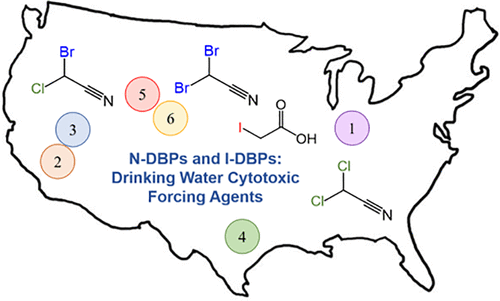
Drivers of Disinfection Byproduct Cytotoxicity in U.S. Drinking Water-Should other DBPs be Considered for Regulation
We report the most comprehensive investigation of drinking water toxicity to date, with measurements of extracted whole-water mammalian cell chronic cytotoxicity, over 70 regulated and priority unregulated DBPs, and total organic chlorine, bromine, and iodine, revealing a more complete picture of toxicity drivers.
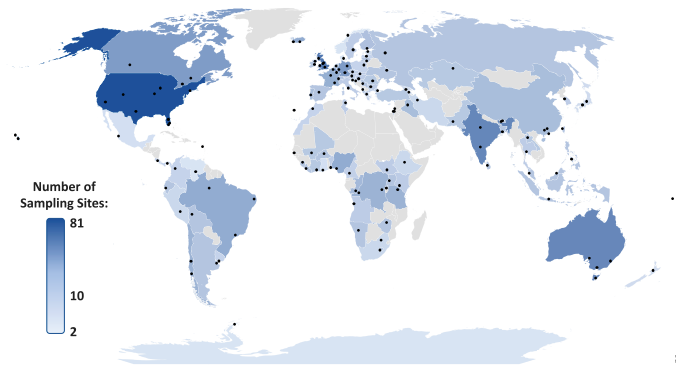
Pharmaceutical pollution of the world’s rivers
a global-scale study of active pharmaceutical ingredients (API) pollution in 258 of the world’s rivers, representing the environmental influence of 471.4 million people across 137 geographic regions.

Unregulated Contaminants Monitoring Rule (UCMR5) includes smaller systems & 29 PFAS
As implied by the name it is the 5th in a series of monitoring rules that provides data for regulatory considerations. An important highlight is the inclusion of 29 different per-and polyfluoroalkyl substances (table below).
Guidance on Monitoring the Biological Stability of Drinking Water in Distribution Systems
Following a request for comments in July 2020 they have released Guidance on Monitoring the Biological Stability of Drinking Water in Distribution Systems. The intent of the document “is to provide responsible authorities, such as municipalities and water system operators, with an overview of: 1) causes of microbial water quality deterioration in the distribution system; 2) monitoring tools that can be used to assess biological stability; and 3) distribution system management strategies.
Health Canada withdrew existing guidelines for 17 contaminants
Health Canada has withdrawn the existing Guidelines for Canadian Drinking Water Quality for 17 chemical substances, including 13 pesticides. The rational was described as being no longer required since these contaminants are unlikely to be found in Canadian drinking water at levels that may pose a risk to human health.

Interdisciplinary Centre on Climate Change (IC3) appoints three new associate directors
Monica Emelko appointed as Associate Director of Climate risk, resilience, and adaptation for the Interdisciplinary Centre on Climate Change (IC3)
In The Press
Praesent lectus leo, convallis id neque nec, ultrices euismod nibh. Sed ac rhoncus quam. Fusce tristique tellus diam, vel porta eros iaculis vitae.
On-Going Research
Praesent lectus leo, convallis id neque nec, ultrices euismod nibh. Sed ac rhoncus quam. Fusce tristique tellus diam, vel porta eros iaculis vitae.
Drivers of Disinfection Byproduct Cytotoxicity in U.S. Drinking Water-Should other DBPs be Considered for Regulation
We report the most comprehensive investigation of drinking water toxicity to date, with measurements of extracted whole-water mammalian cell chronic cytotoxicity, over 70 regulated and priority unregulated DBPs, and total organic chlorine, bromine, and iodine, revealing a more complete picture of toxicity drivers.
Pharmaceutical pollution of the world’s rivers
a global-scale study of active pharmaceutical ingredients (API) pollution in 258 of the world’s rivers, representing the environmental influence of 471.4 million people across 137 geographic regions.
Unregulated Contaminants Monitoring Rule (UCMR5) includes smaller systems & 29 PFAS
As implied by the name it is the 5th in a series of monitoring rules that provides data for regulatory considerations. An important highlight is the inclusion of 29 different per-and polyfluoroalkyl substances (table below).
Guidance on Monitoring the Biological Stability of Drinking Water in Distribution Systems
Following a request for comments in July 2020 they have released Guidance on Monitoring the Biological Stability of Drinking Water in Distribution Systems. The intent of the document “is to provide responsible authorities, such as municipalities and water system operators, with an overview of: 1) causes of microbial water quality deterioration in the distribution system; 2) monitoring tools that can be used to assess biological stability; and 3) distribution system management strategies.
Health Canada withdrew existing guidelines for 17 contaminants
Health Canada has withdrawn the existing Guidelines for Canadian Drinking Water Quality for 17 chemical substances, including 13 pesticides. The rational was described as being no longer required since these contaminants are unlikely to be found in Canadian drinking water at levels that may pose a risk to human health.
Interdisciplinary Centre on Climate Change (IC3) appoints three new associate directors
Monica Emelko appointed as Associate Director of Climate risk, resilience, and adaptation for the Interdisciplinary Centre on Climate Change (IC3)
Discover The Future
We are a multi-disciplinary laboratory committed to focussed and efficient drug discovery